This guest post is from the team over at Cognitive fx. They use a unique combination of state-of-the-art imaging and therapy to improve TBI and PCS symptoms for their patients. You can learn more about their approach here.
When you look into how to create a mindset, you can see that your thoughts, beliefs, and attitudes shape your current mindset. The good news is that this indicates that a mindset isn’t always fixed. Mindsets can evolve and adapt. Even if it takes work, you can choose your mindset.
So how does your mindset influence your actions?
You have probably heard the phrase “actions speak louder than words.” When you take a more in-depth look at the connection between words and actions, it is essential to recognize that your words are the background behind your actions.
It has been said, “Watch your thoughts, for they become your words. Watch your words, for they become your actions. Watch your actions, for they become your habits and your beliefs.” The words you think about yourself and your circumstances influence what you are capable of doing and being. Your words determine your action or inaction in reality.
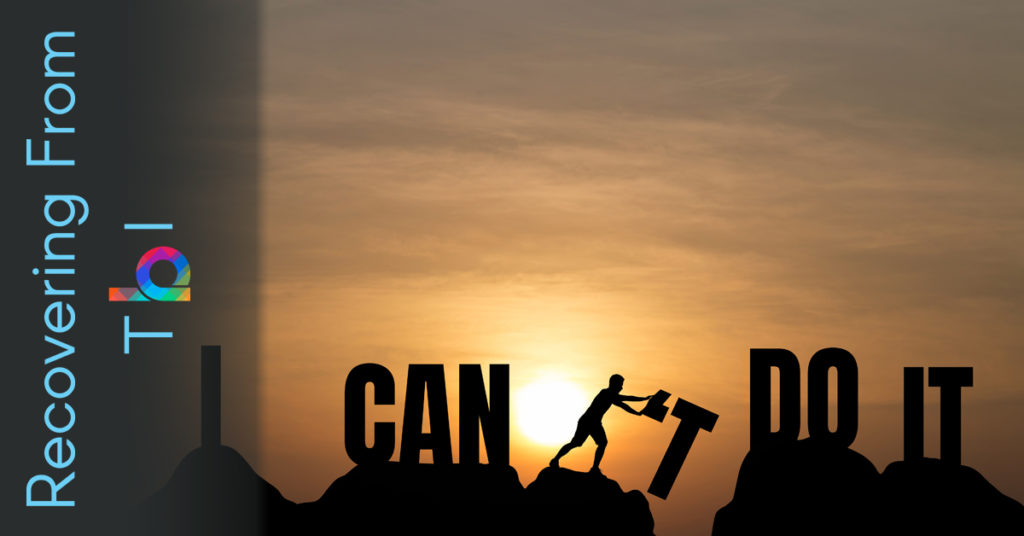
So you may wonder, “What does this have anything to do with a brain injury, recovery, or living with post-concussion symptoms?” Your mindset is a critical piece of recovery. The mindset you choose will have a real impact on your ability to improve—whether you choose a Can’t Mindset or a Can Mindset.
The Impact of Can’t
Let’s take a look at the mindset of “can’t.” Did you know that the word “not” is only used as a short substitute for something negative? Any time you say “not,” you attach negativity and doubt into whatever you are saying.
When you can’t do something, typically you are left feeling stuck. “Can’t” brings an environment of settling and hopelessness. “Can’t” or “can not” are the words that kill any option or opportunity for something to be different than it currently is.
So how would this mindset change the way you experience life or go about trying to recover? You may not make very much progress. Most of the time, you would only see all the things you couldn’t do, all the ways you couldn’t get better, and the things you couldn’t have anymore because you have PCS. You may feel like you couldn’t do anything about it.
Therefore, you might feel no hope in taking action to get better, adjust, and grow through the PCS experience.
The Power of Can
So what if you shifted your words from “can not” to “can?”
What could happen if, instead, you said things like:
- What can I do today?
- How can I learn from this experience?
- What can I do to get better?
- How can I see this challenge as an opportunity?
- What can I do to overcome this headache?
By removing the word “can’t” and replacing it with the word “can,” it opens up new opportunities, perspectives, and actions. Finding these actions can help you move through your experience instead of settling or feeling stuck. This one-word shift can make a huge difference in your recovery. The Can Mindset brings hope and growth. “I can” empowers you to keep going, to keep trying, and to keep taking new steps.
You Choose Your Mindset
Choosing your mindset is a lot easier said than done, but it starts with one simple shift in your language. Start by saying “can” and then take the actions consistent with what you say you can do. Choosing a new mindset takes time and practice, it takes determination to keep going, and it takes resilience to keep trying even when you might want to go back to “can’t.”
Ideas to help you choose your mindset:
- Anytime you see your favorite color, remind yourself you can do ___________ (insert hard thing you are facing that day).
- Write down three things a day that you can do, and don’t be afraid to challenge yourself.
- Tell your friends and family what you are up to and working on in your recovery. Challenge them to change their mindset with you, and take new actions together.
- Journal about your experience. Write out your feelings and what you think you can’t do and then turn them into can statements. For example, “I can’t take the next step—I can take the next step, even if it is challenging for me.”
- Take little steps to do the things you can do, and try new things you recognize that you can do.
- Don’t give up, and keep on trying. When the fear of “can’t” arises, it stops you in your tracks. When you decide to take a new step anyway with the reminder that you can, you might surprise yourself just how capable you are.
- Recognize that there is a connection between mindset and gratitude.
Look at what you want to set your sights on. Set smart goals, and keep the Can Mindset with you. By no means is mindset the only thing required for things to improve, but your mindset is fundamental in recovery. So practice, practice, practice, and remember you CAN do this!
Mindset is part of the challenge in recovering from PCS. When your mindset is “can,” and you have the right tools—therapy and treatment—you are on the right path to recovery. You might surprise yourself with what is possible. You can do that hard exercise, you can work on remembering the conversations you have each day, and you can push yourself. You can get better.
So what do you think? Will you choose a Can Mindset and see just how capable you are?

https://shorturl.fm/Ks7c6