After my traumatic brain injury, everything turned on its head. Even though I didn’t want to admit it, I no longer felt like the person I used to be. I had lost some cognitive function, and it was hard to keep moving forward. I struggled with the concept of the “new normal”, and how to accept who I had become.
Going to work was hard. I couldn’t work full days. And I made a lot of mistakes. I almost made one that would have cost my company $20,000! I couldn’t think through problems. It was hard for me to be around friends. In my mind, I kept thinking that they were comparing me to my old self.
I didn’t feel like I could contribute to the various areas of my life like I had before. I lost a lot of confidence in my ability to get married and provide for a family.
After some time, however, I found something that gave me strength to keep going (resilience), was meaningful, helped me connect with others, and was flexible enough to do when I had the energy to do it. What was it?
Family History also known as genealogy
Now before you start thinking about grandmas leaning over dusty books (no offense to those of you who are grandmas), let me clarify that family history has become much more 21st century, and less 19th century in the last 10 years. I’ll get into where to start later, but first let me make my case.
Resilience
Recovering from a brain injury is often a lifelong journey. There are ups and downs and “crash and burns.” While we are grateful for the steps forward, the failures can be devastating.
Wouldn’t it be nice to find a way to replenish our resilience to keep us going?
A knowledge of one’s own family history has been connected to resilience. Researchers think this has something to do with the personal connection it creates to people important to us who have overcome hard things.
One specific example mentioned is:
“… A young high school dropout attending an applied ancestry program discovered a deceased uncle was a marketing professional and the creator of a famous advertising slogan. Previously without a vision of what occupational role to pursue, this youth now had a new sense of who he could be. He subsequently returned home and re-enrolled in school with the intent to pursue tertiary studies in marketing.” (Haydon, Clive. Family History and Identity Achievement).
Other researchers explained, “One can imagine a scenario in which awareness of the ways in which one’s parents or grandparents dealt in the past with the sorts of challenges facing an adolescent in the present can be beneficial in learning to adjust to the stresses and demands of the teen years.” (Fivush, Duke, Bohanek. The Power of Family History in Adolescent Identity and Well Being”
Being aware of the challenges of our parents and grandparents, as well as other relatives significant to us, such as aunts and uncles, can give us more confidence to face the challenges we have have.
While this is true in every area of life, it might be helpful for us to focus on health challenges, especially long term ones. Do you have a relative who experienced type 1 diabetes, or developed type 2 later in life? Did a relative develop a physical or metal disability? How did they handle it? What kind of things were helpful to keep them going?
Caregivers, this applies to you as well. Where there was a long term health challenge, someone (typically a family member) was there to take care of them. How did the caregiver face the changes created by the new responsibility? What did they do to get the self care they needed?
I found a very powerful example while digging into my own family history.
A Lesson from My Great-Grandpa
I was doing an interview with my Grandma about her childhood. She told me when she was a little girl, her dad (my great-grandfather) had experienced an accident which caused a skull fracture.
She remembered him being very irritable for a few years after the accident. My Grandma has memories of her mom (my great-grandmother) telling her not to make my great-grandfather angry, because the doctors said it wasn’t good for him.
From that comment, my grandma was afraid to make my great-grandfather angry, because it might kill him. She admitted to me that the part about killing him was a misunderstanding of her childhood mind.
She told me that it was a few years later when she did something mischievous and really mad her dad angry. As she saw him get upset, she started crying and told her dad not to get angry, because he was going to die. In that moment, her mom and dad asked her what she was talking about. As she explained, they realized the misunderstanding, and clarified it to her.
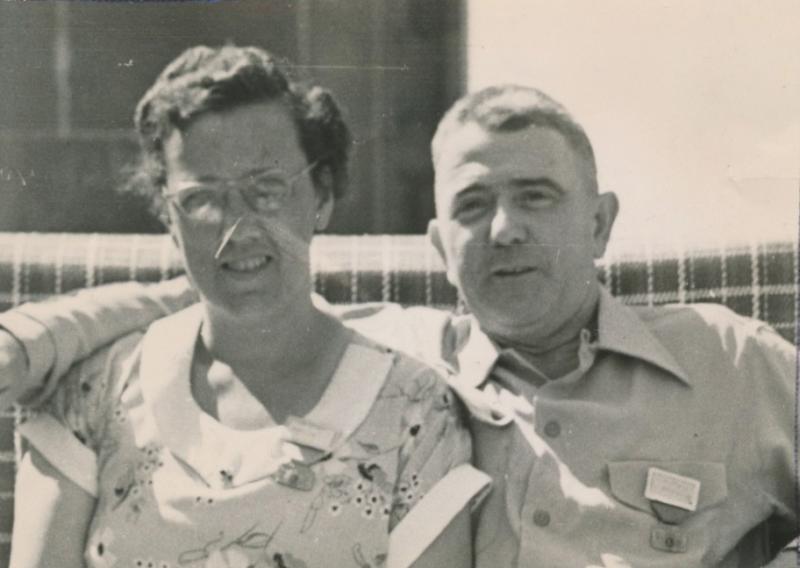
Later, in WWII, my great-grandfather was not allowed to serve in the military because of his fractured skull. He was considered 4F for the draft. 4F was the designation given by the US military to those physically or mentally unfit for military service.
If it wasn’t for his skull fracture years before, the military certainly would have taken him. He had been working as an electrician for several years, back at a time when it was a developing trade. While he was older (early 40’s) than most men being drafted (early 20’s), his skills were definitely in demand. In fact, he had a brother near his age who was drafted and sent to the European theater.
You might guess the reason why this story affected me so much. It sure sounds like my great-grandpa had a brain injury with his fractured skull. And at a time when so many people considered it their duty to go to war, he was told that he was unfit to do so.
I’m sure at the time, the accident and injury my great-grandpa had were devastating. So little was known about skull fractures and brain injuries back in the 1920’s, that it had to be really scary for him and my great-grandma.
Victory After Defeat
But there’s more to the story.
My great-grandpa continued to work in his trade. Over the years, he developed his financial reserves, purchased several acres of land where my grandma still lives. He helped my grandma and grandpa through the difficult financial times in their lives.
My great-grandpa, who we called Pop, died when I was 12. I have many memories of him.
Maybe you don’t have a brain injury in your family, but there is likely some other significant health challenge that someone had to face. See what you can learn from them.
If there is no health challenge, look for other stories of triumph after tragedy, facing a major setback, or winning after failure. What lessons are there that you can apply to your own journey through brain injury recovery.
Meaning
Researching our family history can be incredibly fulfilling.
I found something powerful in tying myself to the past. Many events in world history were present-day events to our parents, grandparents, and great-grandparents. A few events that I have discussed with loved ones include:
-
-
- World War I
- The Great Depression in the US (1930’s)
- World War II
- Korean War
- The US Space program that landed men on the moon
- Vietnam War
- US Civil Rights in the 1960’s
- Local history in my home state of Pennsylvania spanning 1920’s to the present
-
Getting the stories from my family members was entertaining and empowering. As I gathered those stories, several other family members became interested. My grandmother had lots of old family pictures that she contributed to my efforts.
Going through this process provided something meaningful and valuable to do at a time when my professional efforts were not going well.
Connection
After what I just shared, this probably seems like an obvious benefit. To gather the information I did, I had to talk to people. It got me out from the isolation of my injury and helped me reinforce my family relationships.
Lots of times after a brain injury, it’s hard for us to be around people. Or it’s hard for people to be around us. But gathering family history stories and information gives us a neutral topic about which we can talk to others. It gives us an opportunity to come out from our shell and socialize.
Flexibility
I think this is a BIG benefit of family history. Nearly all of us, at least in the short term, get burned out easily doing cognitive tasks. And that’s a big reason why we have a hard time going back to work.
Doing family history research is an “on-demand” activity. Do it when you want to. Stop when you are tired. It’s that easy.
Family history lets you exercise your cognitive abilities like analyzing, memory, organization, curiosity, etc. All of which are things you need to be able to go back to work.
The Benefits Sound Good, But I Hate Dates and Places
Would you like to get the benefits of doing history, but you just can’t bring yourself to digest a bunch of old dates and places?
I’ve got good news for you.
I’ll tell you right now, I am NOT a dates and places guy. I watched my mom do family history for years and thought is was SOOOOOO BOOOORRRRRIIINNNG. Uh, I could not understand why she enjoyed it so much.
What changed my mind? Two things:
Pictures and stories.
For me pictures and stories make history real. it gives me some context in which to visualize what happened in the dates and places.
And as it turns out, the research has found that it is the process of gathering and retelling the stories that really brings the benefits I’ve mentioned.
Gathering the stories creates the connections to others, both in the present and the past. It helps us create what researches call our “inter-generational self.” It is this sense of self that strengthens our resilience, minimizes depression and anxiety, and helps us overcome challenges.
Retelling the stories helps us further internalize the qualities exemplified in them.
Where to Start
If you do a Google search about how to start your family history, it returns 3,970,000,000 results. And who wants to read through them all?
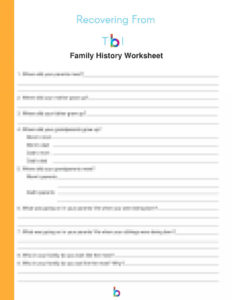
The fastest way to enjoy the benefits of your own family history is to download this worksheet right here.
Researchers have found that to enjoy the benefits of family history, you do not need to trace your family tree back to the 1500’s. Nope. You just need to gather family stories from your parents, grandparents, and, if possible, your great grandparents.
Doctors Marshal Duke, Amber Lazarus, and Robyn Fivush generated a list of questions that they tested in a study as a measure of family history knowledge. Then they tested the results against feelings of depression, anxiety, academic performance, etc. in youngsters.
Those who knew the answers to these questions rated better in all of the measured areas.
Dr. Fivush, gave me permission to create the worksheet to help you start collecting your family history stories.
Remember, the lessons from the stories are important. And how you gather the stories is also an important part of enjoying all of the benefits of family history. Reach out. Connect with your parents, grandparents, aunts, and uncles.
What To Gather
Every family has all kinds of stories. Good ones and bad ones. And these stories weave together to form a family narrative. One type of family narrative, called an ascending narrative, focuses only on the good outcomes. Another type is called the descending narrative, where focus is placed on the negative family experiences.
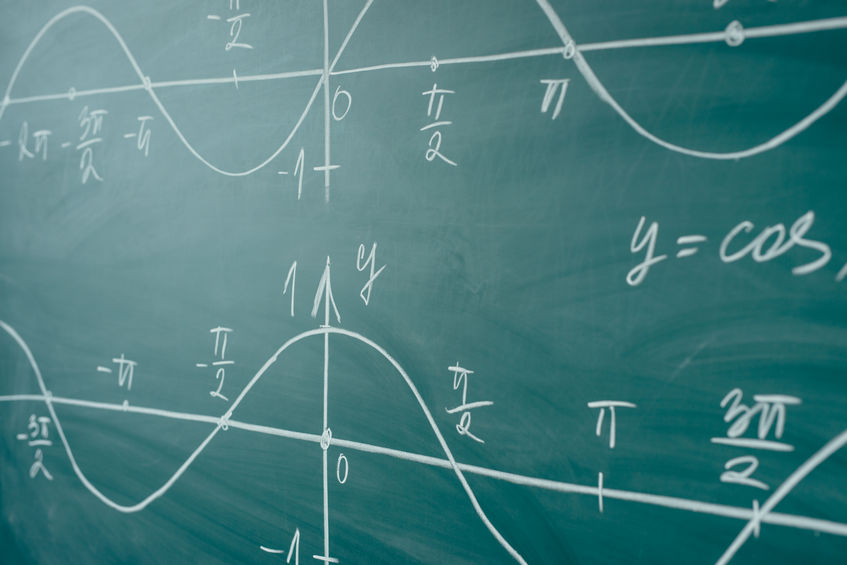
The third, and most constructive narrative, is called the oscillating narrative. Talking about the good and the bad provides perspective that while good things come and go, so do the bad. It helps us weather the bad periods of life knowing that good times will follow.
With that in mind, find out what went well and not so well in the lives of your family members. Draw strength from their ability to stick it out when the odds were against them and see it through to better times.
There you have it.
Here is one activity that is scientifically proven to strengthen resilience, give us meaning, and help us stay connected. And all of us, survivors and caregivers, need more of that during our brain injury recovery journey. It can be very meaningful to us. It helps us stay connected to our loved ones and reduce the isolation that we can sometimes experience. And it is flexible enough that we can do it when we have strength to.
I have found family history to be a very important part of my recovery. I truly feel like it helped me keep going when I thought I would give up.
Many thanks to Doctor Robyn Fivush, Samuel Candler Dobbs Professor of Psychology at Emory University, for providing numerous articles that her and her colleagues have published on this topic! If you are interested in this topic, you can find more information about her work here, here, and here.
Has family history helped you with your recovery? Are you willing to give it a shot? I’d love to hear about your experiences in the comments below.

https://shorturl.fm/xXst2